
AI Readiness Assessment
Establishing the Foundation for AI Adoption
AI readiness extends beyond technology. It depends on accessible information, appropriate permissions, security controls, governance, and operational preparedness.
Intrinsic evaluates these areas to identify material gaps and establish priorities for responsible AI adoption. Start with a conversation about your environment, objectives, and readiness priorities.
AI Readiness in Context
Evaluating the Environment Behind AI
AI does not operate independently of the technology and information environment around it.
Its effectiveness and risk are influenced by how information is organized, where it resides, who has access to it, how identities and applications are controlled, and what governance is in place.
These considerations become particularly important as AI capabilities are integrated with platforms such as Microsoft 365 and other business applications, where existing access rights and information structures can directly influence what AI can retrieve and present.
Intrinsic evaluates readiness across these interconnected areas to establish whether the appropriate foundations are in place and identify matters requiring attention before or alongside adoption.
Areas of Assessment
The Areas That Shape AI Readiness
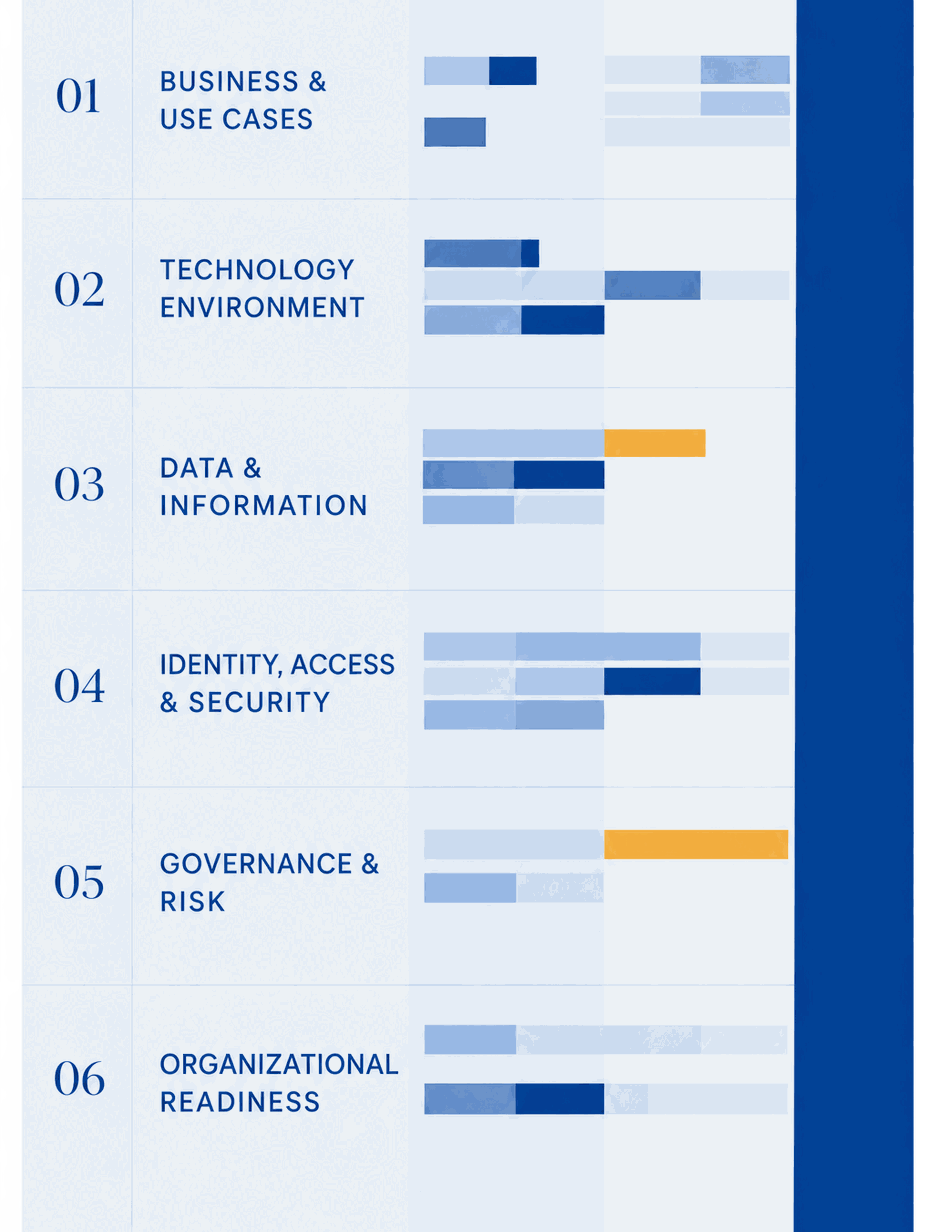
Business & Use Cases
Business objectives, proposed and existing AI use, expected outcomes, priorities, and the organizational requirements AI is intended to support.
Technology Environment
Infrastructure, cloud platforms, Microsoft 365, applications, integrations, third-party AI services, and the technical dependencies associated with AI adoption.
Data & Information
Information sources, data quality, structure, accessibility, ownership, retention, and the information that may be made available to AI systems.
Identity, Access & Security
Identity management, authentication, permissions, endpoints, application access, data protection, and the security controls surrounding AI use.
Governance & Risk
AI policies, approved use, information handling, accountability, oversight, regulatory considerations, and processes for identifying and managing AI-related risk.
Organizational Readiness
Leadership alignment, internal responsibility, user preparedness, training, operational processes, and the organization's ability to support and manage AI over time.
Online AI Readiness Assessment
An Initial View of Your Current Position
Intrinsic begins with a focused conversation to understand your AI objectives, current technology environment, information practices, security considerations, and organizational priorities.
This initial discussion helps identify the areas that may require closer evaluation and establishes an appropriate next step for your organization.
Your Report Includes
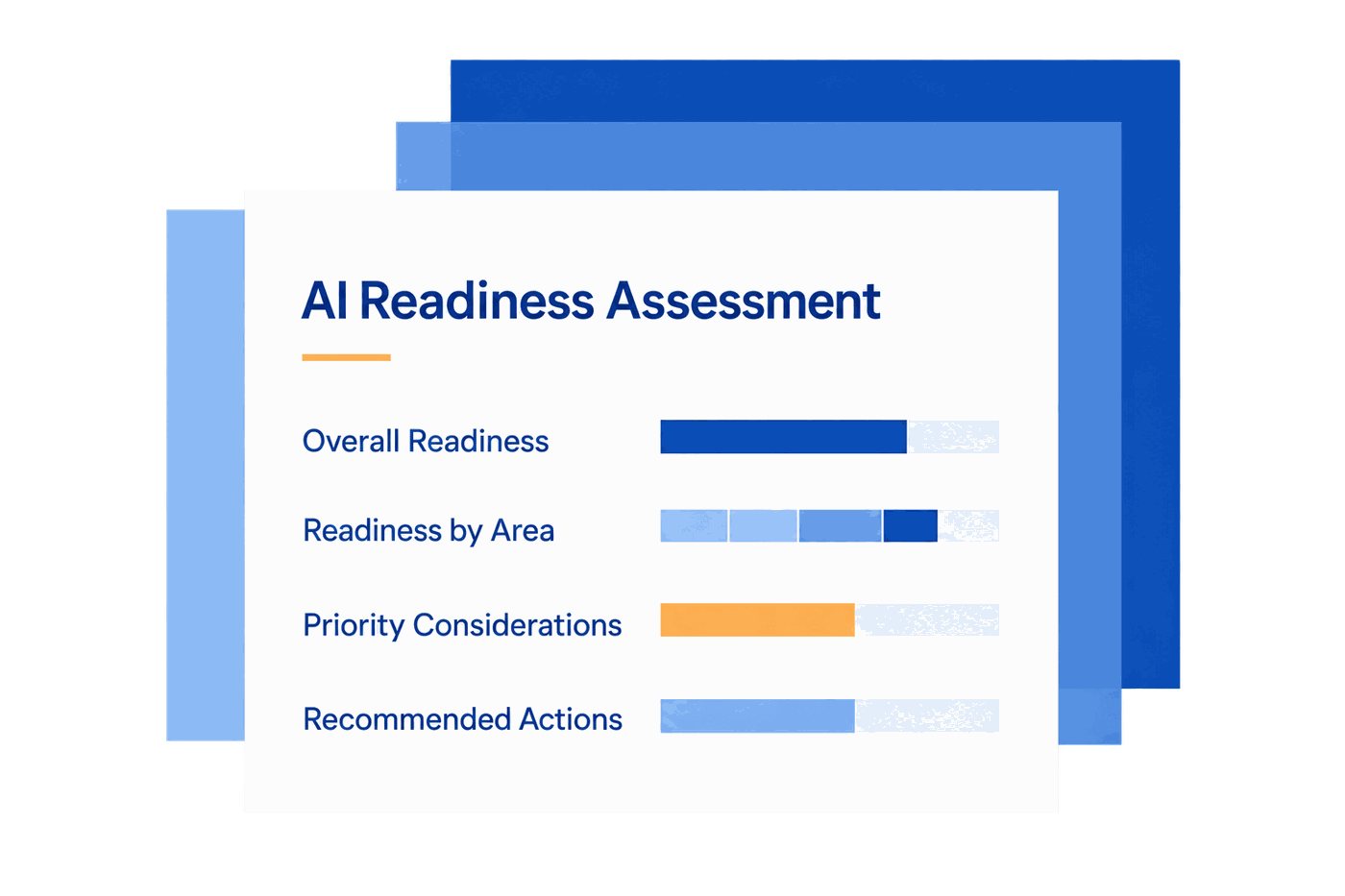
Overall Readiness
Understand the organization’s current position and preparedness.
Readiness by Area
Understand the organization’s current position and preparedness.
Priority Considerations
Identify the matters that may require further attention or evaluation.
Recommended Actions
Establish practical next steps based on the organization’s objectives and environment.
Comprehensive Readiness Assessment
Moving Beyond
Self-Assessment
When AI adoption is being actively considered or expanded, a more detailed review of the underlying environment may be appropriate.
Intrinsic can examine technology platforms, information practices, identity and access, security controls, governance requirements, proposed use cases, organizational readiness, and relevant dependencies. The scope and deliverables are defined with the organization before the review begins.
The findings are evaluated collectively to establish:
- Current state and areas of readiness
- Material gaps and areas of exposure
- Technical and organizational dependencies
- Governance and security requirements
- Priorities for remediation or preparation
- Recommended path for adoption
Defined Readiness Plan
A Defined Readiness Plan
A readiness review should lead to a practical plan—not simply a list of observations. Intrinsic brings the findings together to define what can move forward, what should be prepared first, and which gaps require further attention.
The resulting plan establishes priorities, identifies dependencies, clarifies responsibility, and outlines the actions needed to support responsible AI adoption.
It gives leadership a structured basis for making decisions while allowing the organization to proceed at a pace appropriate to its objectives, resources, and risk requirements.
Ready
Areas that can move forward.
Prepare
Matters to address before adoption.
Address
Material gaps requiring attention.
Decide
Items requiring further evaluation or leadership decision.
From Assessment to Ongoing Management
Establishing the Appropriate Next Steps
AI readiness requirements will differ by organization.
The assessment may identify a need to strengthen identity and permissions, improve information governance, establish policies and approved-use standards, address security controls, prepare Microsoft 365 for Copilot, refine proposed use cases, evaluate third-party AI applications, or establish responsibility for ongoing AI management.
Where additional support is required, Intrinsic can carry these priorities forward through AI Governance & Compliance and Managed AI—providing continuity from readiness and preparation through governance and ongoing management.
AI Readiness Assessment
A Clearer Basis for AI Decisions
Understand the current environment, identify the requirements that matter, and establish a structured basis for AI adoption.